

🔄
Emerald Cut Engagement Rings | Step Cut Rings in 14K Gold | Giliarto Page 2

PAYMENT PLANS AND INSTALMENTS ARE AVAILABLE AT THE CHECKOUT PAGE

PAYMENT PLANS AND INSTALMENTS ARE AVAILABLE AT THE CHECKOUT PAGE

Emerald Cut Engagement Rings


The emerald cut is one of the oldest diamond shapes still in production. Originally developed in the 16th century for cutting actual emerald gemstones - hence the name - it was later adopted for diamonds and has remained a staple of fine jewelry ever since. Today it is the preferred cut for buyers who want a ring that reads as refined and deliberate rather than flashy.

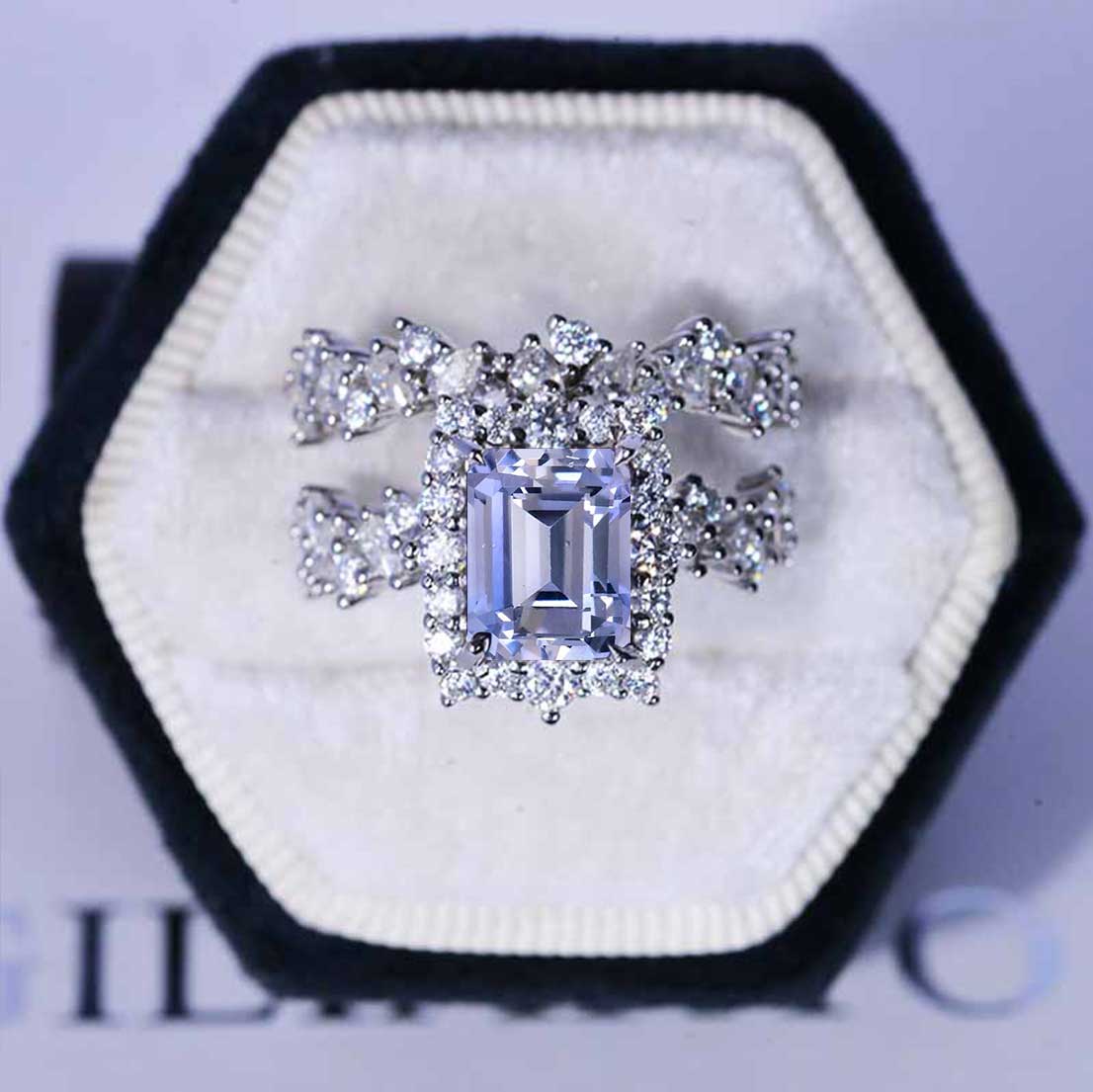
What defines the emerald cut is its rectangular shape with cropped corners and step-cut facets running parallel to the girdle. Instead of the rainbow sparkle of a brilliant cut, an emerald cut produces what is known as the "hall of mirrors" effect: long, dramatic flashes of light and dark that move as the ring moves. It is a quieter kind of brilliance, but a striking one.

Celebrities who have chosen emerald cut engagement rings include Beyonce, Jennifer Lopez, Amal Clooney, and Angelina Jolie.

This collection includes emerald cut settings across all center stone materials: alexandrite, aquamarine, teal sapphire, moissanite, lab diamond, natural emerald, moonstone, and more.

What to Know Before Choosing an Emerald Cut

Clarity matters more than in other cuts

The large, open table facets act like windows into the stone. Inclusions that would be hidden by the sparkle of a round brilliant are fully visible in an emerald cut. For diamonds, VS2 is generally the minimum for eye-clean; VS1 or higher is safer. For colored stones like aquamarine or teal sapphire, the same principle applies.

Color shows more clearly

Step-cut facets do not mask body color the way brilliant facets do. For diamonds, G or higher is recommended. For colored gemstones this works in your favor - an alexandrite or peach sapphire shows its color more richly in an emerald cut than in a round.

Length-to-width ratio determines the look

The classic emerald cut ratio is 1.40-1.50 for a traditional elongated rectangle. Ratios closer to 1.30 look squarer; ratios above 1.60 are very elongated. There is no wrong answer - it comes down to preference and hand proportions.

The cut elongates the finger

Like oval and pear, emerald cut engagement rings create a lengthening effect on the hand and give maximum visual impact per carat.

Emerald Cut vs Other Step Cuts

Asscher cut

Square version of the emerald cut with a higher crown and more dramatic hall-of-mirrors effect. If you want step-cut in a square shape rather than rectangular, Asscher is the alternative.

Radiant cut

Rectangular like the emerald cut but with brilliant-cut facets. Produces more sparkle and hides inclusions better, but lacks the clean geometry. Browse radiant cut rings here.

Baguette

Similar step-cut structure but typically used as a side stone rather than center.

Setting Styles

Halo

The most popular format in this collection. Accent stones frame the center stone, amplifying its size and adding brilliance that the step cut does not produce on its own. Works especially well with alexandrite and aquamarine.

Solitaire

The emerald cut on its own in a clean four or six-prong basket. The geometry does all the work. Best suited to higher-clarity, well-saturated stones.

Three-stone

Emerald cut center flanked by two side stones. The traditional format for vintage emerald cut engagement rings. Pairs well with teal sapphire and natural emerald centers.

Bezel

A full metal rim surrounds the stone, protecting the cropped corners. The most modern, minimal look in the collection.

Vintage and Art Deco

The emerald cut is the default shape of the Art Deco era. Milgrain edges, pave bands, and geometric metalwork all suit it naturally.

Available in 14K and 18K white, yellow, and rose gold.

FAQ

Is an emerald cut good for an engagement ring?

Yes. The elongated shape, hall-of-mirrors effect, and step-cut elegance make it one of the most popular non-round shapes. The main consideration is clarity: inclusions are more visible here than in brilliant cuts, so stone quality matters more.

Are emerald cut diamonds more expensive than round?

Generally less expensive per carat. Round brilliants command a premium from higher demand and greater material waste in cutting. An emerald cut diamond of the same carat, color, and clarity typically costs 10-30% less. However, stricter clarity requirements often mean buyers end up in a higher grade.

Do emerald cut diamonds look bigger than round diamonds?

Yes, face-up. The large table surface gives it a bigger apparent size than a round of the same carat weight. The elongated shape also creates a finger-lengthening effect that adds to the impression.

What is the best length-to-width ratio for an emerald cut?

The classic range is 1.40-1.50. Below 1.30 looks square; above 1.60 looks very narrow. Both extremes work depending on personal preference and hand shape.

What is the difference between an emerald cut and an Asscher cut?

Shape and proportions. An Asscher cut is square with a 1:1 ratio and higher crown. An emerald cut is rectangular, typically 1.40-1.50 ratio, with a lower profile. Both are step cuts with the same hall-of-mirrors effect.

What clarity grade do I need for an emerald cut diamond?

VS2 as a minimum for eye-clean, though VS1 or higher is safer. The location of inclusions matters as much as the grade - an inclusion at the edge near a prong is far less visible than one under the center of the table.

Can I choose the center stone material?

Yes. Use the filters above to browse by stone type, or go directly to alexandrite, aquamarine, lab diamond, moissanite, or natural emerald.

Free worldwide shipping. Lifetime warranty. 30-day returns. Payment plans at checkout.

Browse by shape: Oval cut | Round cut | Pear cut | Cushion cut | Marquise cut | Asscher cut | Radiant cut

The emerald cut is one of the oldest diamond shapes still in production. Originally developed in the 16th century for cutting actual emerald gemstones - hence the name - it was later adopted for diamonds and has remained a staple of fine jewelry ever since. Today it is the preferred cut for buyers who want a ring that reads as refined and deliberate rather than flashy.

What defines the emerald cut is its rectangular shape with cropped corners and step-cut facets running parallel to the girdle. Instead of the rainbow sparkle of a brilliant cut, an emerald cut produces what is known as the "hall of mirrors" effect: long, dramatic flashes of light and dark that move as the ring moves. It is a quieter kind of brilliance, but a striking one.

Celebrities who have chosen emerald cut engagement rings include Beyonce, Jennifer Lopez, Amal Clooney, and Angelina Jolie.

This collection includes emerald cut settings across all center stone materials: alexandrite, aquamarine, teal sapphire, moissanite, lab diamond, natural emerald, moonstone, and more.

What to Know Before Choosing an Emerald Cut

Clarity matters more than in other cuts

The large, open table facets act like windows into the stone. Inclusions that would be hidden by the sparkle of a round brilliant are fully visible in an emerald cut. For diamonds, VS2 is generally the minimum for eye-clean; VS1 or higher is safer. For colored stones like aquamarine or teal sapphire, the same principle applies.

Color shows more clearly

Step-cut facets do not mask body color the way brilliant facets do. For diamonds, G or higher is recommended. For colored gemstones this works in your favor - an alexandrite or peach sapphire shows its color more richly in an emerald cut than in a round.

Length-to-width ratio determines the look

The classic emerald cut ratio is 1.40-1.50 for a traditional elongated rectangle. Ratios closer to 1.30 look squarer; ratios above 1.60 are very elongated. There is no wrong answer - it comes down to preference and hand proportions.

The cut elongates the finger

Like oval and pear, emerald cut engagement rings create a lengthening effect on the hand and give maximum visual impact per carat.

Emerald Cut vs Other Step Cuts

Asscher cut

Square version of the emerald cut with a higher crown and more dramatic hall-of-mirrors effect. If you want step-cut in a square shape rather than rectangular, Asscher is the alternative.

Radiant cut

Rectangular like the emerald cut but with brilliant-cut facets. Produces more sparkle and hides inclusions better, but lacks the clean geometry. Browse radiant cut rings here.

Baguette

Similar step-cut structure but typically used as a side stone rather than center.

Setting Styles

Halo

The most popular format in this collection. Accent stones frame the center stone, amplifying its size and adding brilliance that the step cut does not produce on its own. Works especially well with alexandrite and aquamarine.

Solitaire

The emerald cut on its own in a clean four or six-prong basket. The geometry does all the work. Best suited to higher-clarity, well-saturated stones.

Three-stone

Emerald cut center flanked by two side stones. The traditional format for vintage emerald cut engagement rings. Pairs well with teal sapphire and natural emerald centers.

Bezel

A full metal rim surrounds the stone, protecting the cropped corners. The most modern, minimal look in the collection.

Vintage and Art Deco

The emerald cut is the default shape of the Art Deco era. Milgrain edges, pave bands, and geometric metalwork all suit it naturally.

Available in 14K and 18K white, yellow, and rose gold.

FAQ

Is an emerald cut good for an engagement ring?

Yes. The elongated shape, hall-of-mirrors effect, and step-cut elegance make it one of the most popular non-round shapes. The main consideration is clarity: inclusions are more visible here than in brilliant cuts, so stone quality matters more.

Are emerald cut diamonds more expensive than round?

Generally less expensive per carat. Round brilliants command a premium from higher demand and greater material waste in cutting. An emerald cut diamond of the same carat, color, and clarity typically costs 10-30% less. However, stricter clarity requirements often mean buyers end up in a higher grade.

Do emerald cut diamonds look bigger than round diamonds?

Yes, face-up. The large table surface gives it a bigger apparent size than a round of the same carat weight. The elongated shape also creates a finger-lengthening effect that adds to the impression.

What is the best length-to-width ratio for an emerald cut?

The classic range is 1.40-1.50. Below 1.30 looks square; above 1.60 looks very narrow. Both extremes work depending on personal preference and hand shape.

What is the difference between an emerald cut and an Asscher cut?

Shape and proportions. An Asscher cut is square with a 1:1 ratio and higher crown. An emerald cut is rectangular, typically 1.40-1.50 ratio, with a lower profile. Both are step cuts with the same hall-of-mirrors effect.

What clarity grade do I need for an emerald cut diamond?

VS2 as a minimum for eye-clean, though VS1 or higher is safer. The location of inclusions matters as much as the grade - an inclusion at the edge near a prong is far less visible than one under the center of the table.

Can I choose the center stone material?

Yes. Use the filters above to browse by stone type, or go directly to alexandrite, aquamarine, lab diamond, moissanite, or natural emerald.

Free worldwide shipping. Lifetime warranty. 30-day returns. Payment plans at checkout.

Browse by shape: Oval cut | Round cut | Pear cut | Cushion cut | Marquise cut | Asscher cut | Radiant cut


Giftbox
Choose your free gift
×